Care & repair guide
Removing Stains from Stone Worktops
Most stains in natural stone can be drawn back out with the right poultice. The trick is matching the method to the stain — and never making it worse first.
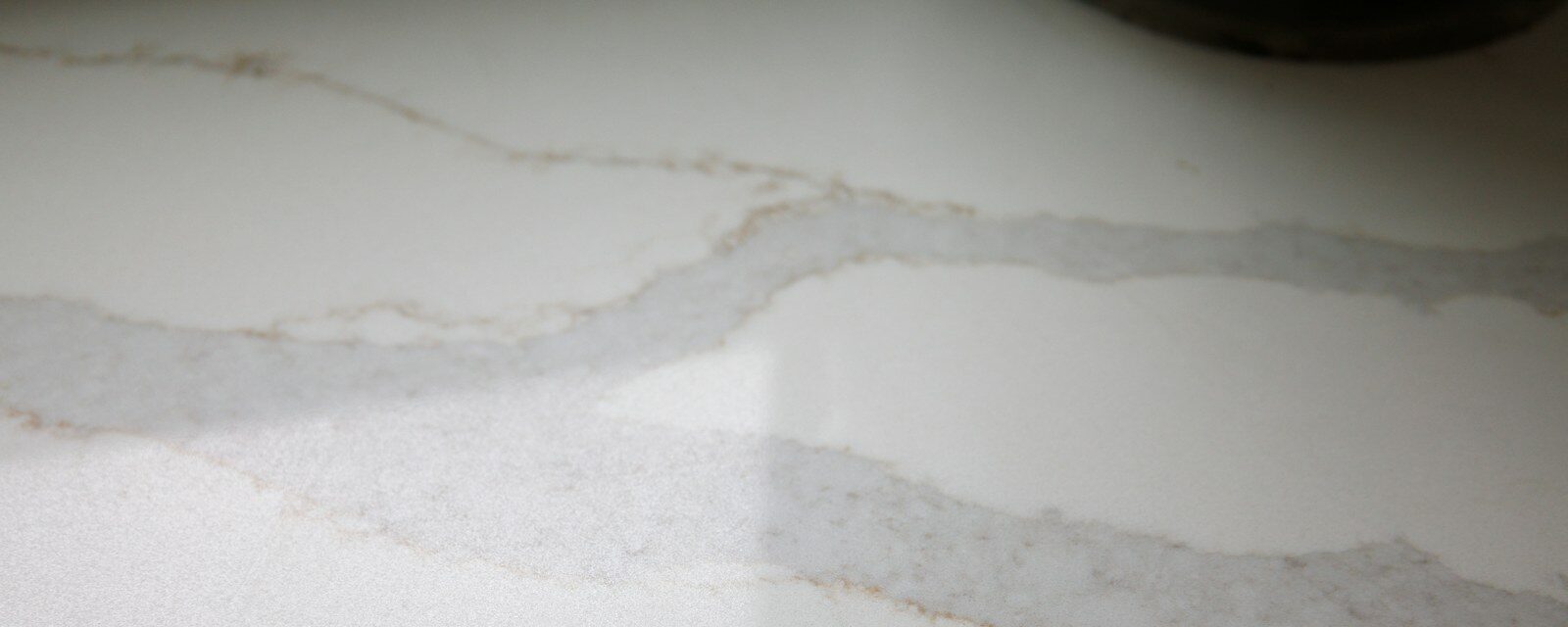
A stain in a stone worktop is rarely the disaster it first appears. Natural stone is porous, which is how the stain got in — but the same porosity lets you draw it back out again, using a poultice: an absorbent paste that sits on the mark and pulls the staining agent up into itself as it dries. Done patiently, poulticing rescues the great majority of marks we are asked about.
The essential first step is identifying what kind of stain you have, because the chemistry that lifts an oil stain does nothing for rust, and the limescale "stain" around a tap is not a stain at all. This guide works through the common culprits one by one. It applies to marble, granite and other natural stones; engineered quartz is non-porous, so what looks like a stain on quartz is almost always surface residue with a different fix, covered at the end.
What is a poultice and how do I make one?
A poultice is a thick, absorbent paste — commonly kaolin clay, whiting or even plain kitchen paper — mixed with a liquid chosen to dissolve the specific stain. Spread it 5–10mm thick over the mark, cover with cling film taped at the edges, and leave it for 24–48 hours.
As the poultice dries it draws the dissolved stain up out of the pores and into itself. Lift it off, wipe the area clean, and let the stone dry fully — the patch often looks worse (darker, damper) immediately after, then improves over a day or two as moisture evaporates. Stubborn stains routinely need two or three cycles, so persist before declaring defeat. Once the stain is out, reseal the area so it does not happen again.
How do I remove oil and grease stains from stone?
Oil stains — butter, cooking oil, hand cream — show as a dark patch that will not dry out. Lift them with a degreasing poultice: kaolin or paper towel soaked in acetone, or a few drops of washing-up liquid in water for lighter marks, applied as above for 24–48 hours.
Oil is the most common worktop stain and one of the most responsive to poulticing, because solvents dissolve it readily. Fresh oil marks can often be stopped early: blot (never wipe outward — you will spread it), cover with an absorbent powder like cornflour for a few hours, then wash with a squirt of neutral detergent. The area around the hob and any full-height splashback is where sealer wears fastest, so test and reseal there most often.
How do I remove wine, coffee and food-colour stains?
Organic stains — red wine, coffee, tea, turmeric, beetroot — respond to an oxidising poultice: 12% hydrogen peroxide (hair-bleach strength) mixed into whiting or kaolin, left on the stain for 24 hours under cling film. The peroxide bleaches the organic pigment out within the stone.
On light-coloured marble and limestone this is safe and remarkably effective. On dark granites, use peroxide cautiously and test somewhere hidden first — prolonged oxidising contact can lighten some stones. A useful quirk: organic stains on an outdoor surface, such as an outdoor kitchen top, often fade on their own, because sunlight does the bleaching for you.
How do I deal with rust and metal stains?
Rust stains — orange-brown marks from a tin, a cast-iron pan or a metal utensil left wet — need a specialist rust remover formulated for natural stone, applied exactly to the manufacturer's instructions. They are the hardest common stain to shift, and the one where DIY most often goes wrong.
Never use a general-purpose rust remover or anything acidic on marble or limestone: most rust products are acid-based and will etch a bleached, dull patch far more noticeable than the rust was. Stone-safe rust removers use chelating agents instead, which grab the iron without attacking the calcium. If a rust mark survives a proper stone-safe treatment, stop and send us a photo — repeated aggressive attempts damage the polish and make professional rescue harder.

Is limescale a stain — and how do I remove it safely?
Limescale is not a stain in the stone; it is a crusty mineral deposit sitting on top of it, built up where hard Surrey and London water evaporates around taps and draining areas. The catch: every household limescale remover is acidic, and acid etches marble, limestone and travertine on contact.
On calcium-based stones, remove limescale mechanically instead — soften it with warm water, then ease it off with a plastic scraper or a white non-scratch pad and neutral cleaner, patiently and in stages. On granite and quartz, a brief, targeted application of a mild descaler is tolerable, rinsed thoroughly straight after. Prevention beats cure: wipe standing water off vanity tops and around draining grooves, and dry the tap area daily in hard-water postcodes.
What should I never put on a stained stone worktop?
Never use vinegar, lemon, bleach-and-scour creams, limescale removers or generic rust products on marble, limestone or travertine — all are acidic or abrasive and will trade a removable stain for permanent etching. Avoid wire wool and green scouring pads on any polished stone, including granite.
Be equally wary of internet remedies involving sandpaper: abrading a stain out leaves a dull hollow that catches the light, which then needs professional re-polishing anyway. And do not keep layering different chemicals over the same mark — residues interact, and we have seen simple wine stains turn into complicated chemical marks through sheer enthusiasm. One method, applied patiently and repeated, is the discipline that works.
Why does quartz "stain" differently — and what fixes it?
Quartz is non-porous, so true absorbed stains are rare; what looks like a stain is usually residue bonded to the surface — dried-on tea, metal marks from pans, or hazing from a cleaning product. The fix is a non-abrasive cream cleaner or a dedicated quartz cleaner and a white pad, not a poultice.
The exception is prolonged contact with strong colourants or harsh chemicals (paint stripper, permanent marker, some drain cleaners), which can mark the resin component of engineered quartz permanently. Brands differ in their tolerance — the care guidance from Silestone and Caesarstone, for example, is worth following for warranty reasons as much as for the stone.
When is a stain beyond DIY — and what can we do?
Hand a stain to a professional when two or three correct poultice cycles have not shifted it, when it covers a large area, when it sits in a prominent spot where patchy DIY results would show, or when the stain is combined with etching or a chip. At that point, more home chemistry risks more damage.
We restore stone worktops across Surrey and South West London from our West Molesey workshop — deep extraction poultices, machine re-polishing and chip repair in the same visit where needed. If the stone is genuinely past saving, we will say so and price a replacement honestly: the instant estimator gives you a guide figure in a minute, and we beat any written like-for-like quote. Call 0208 123 3004.
FAQ
Your questions, answered.
How long does a poultice take to work?+
Will the stained patch look worse after poulticing?+
Can I use bleach on a white marble worktop?+
My granite has a dark ring under where the olive oil bottle lives — is that permanent?+
Do stains mean my worktop was not sealed properly?+
Do you offer stain removal as a standalone service?+
Related reading
Sealing Marble Worktops
Stop the next stain before it starts — testing and resealing.
ReadRe-Polishing Stone Worktops
For etch marks, dull patches and lost gloss.
ReadChip & Crack Repair
Colour-matched resin repairs for edges and surfaces.
ReadGranite Worktops
Dense, forgiving natural stone for hard-working kitchens.
ReadQuartz Worktops
Non-porous engineered stone that never needs sealing.
ReadSend Us a Photo
Quick honest assessment of any stain or mark.
Read
Ready to price your worktops?
Get an instant guide estimate online, or talk it through with the workshop.