Throughout the home
Splashbacks & Upstands
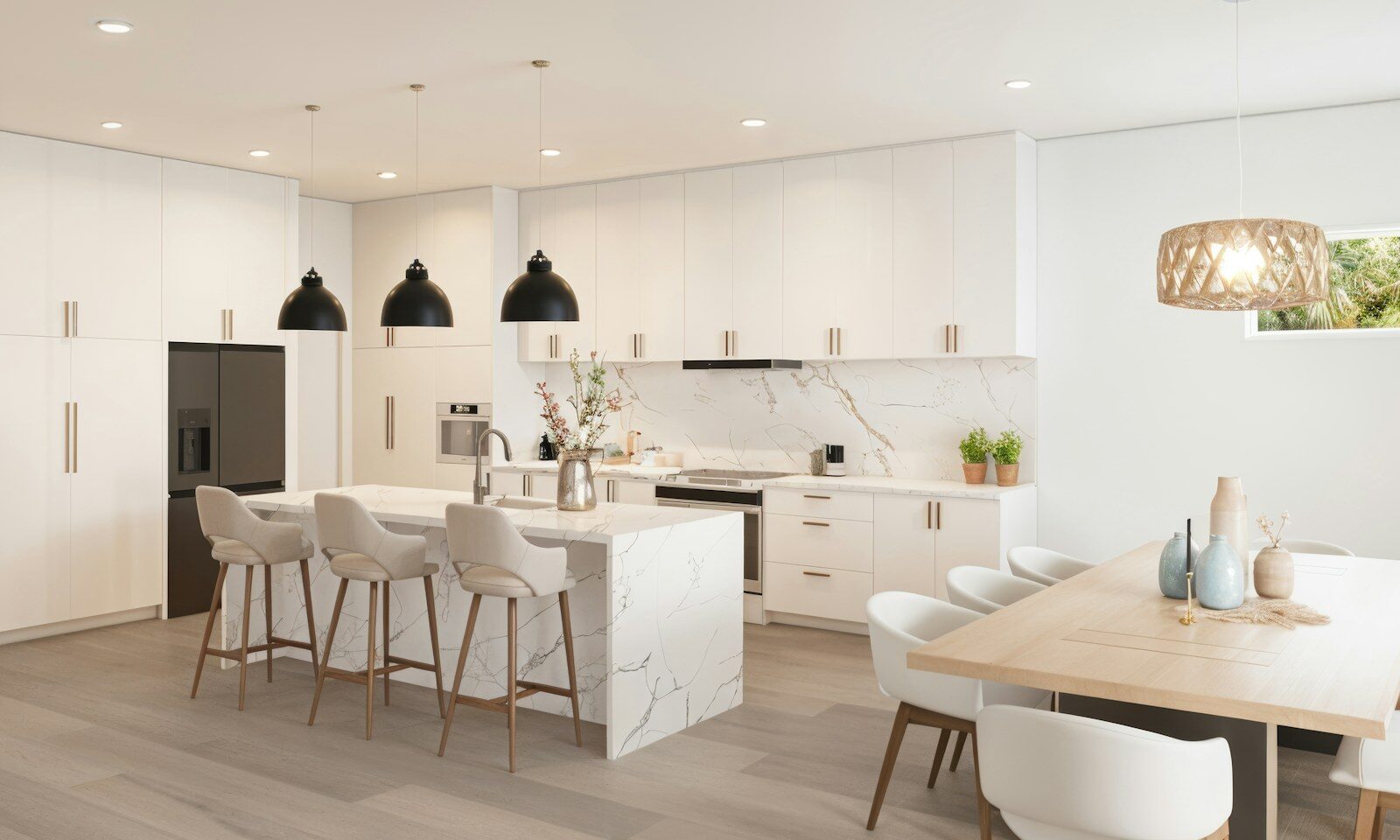
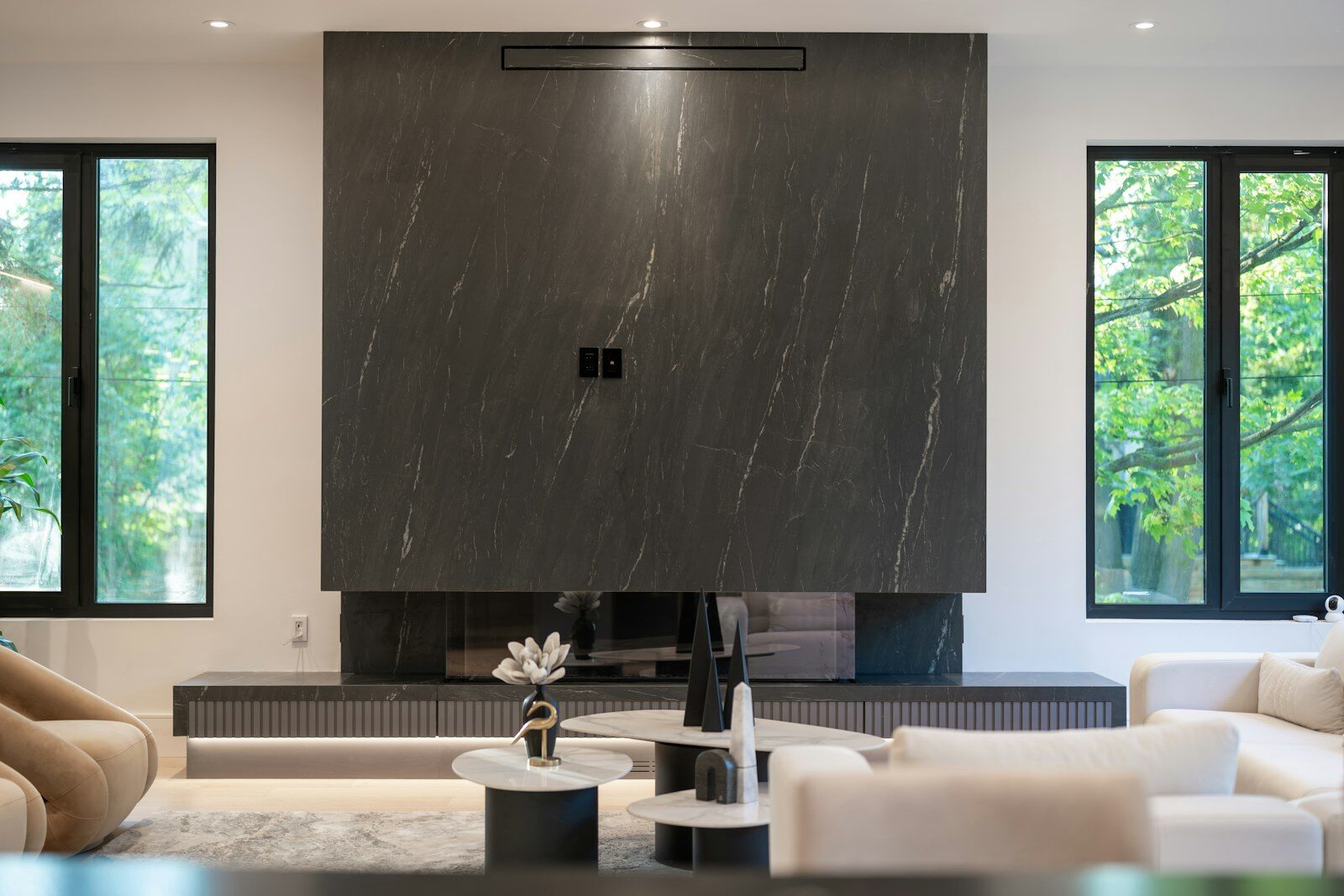
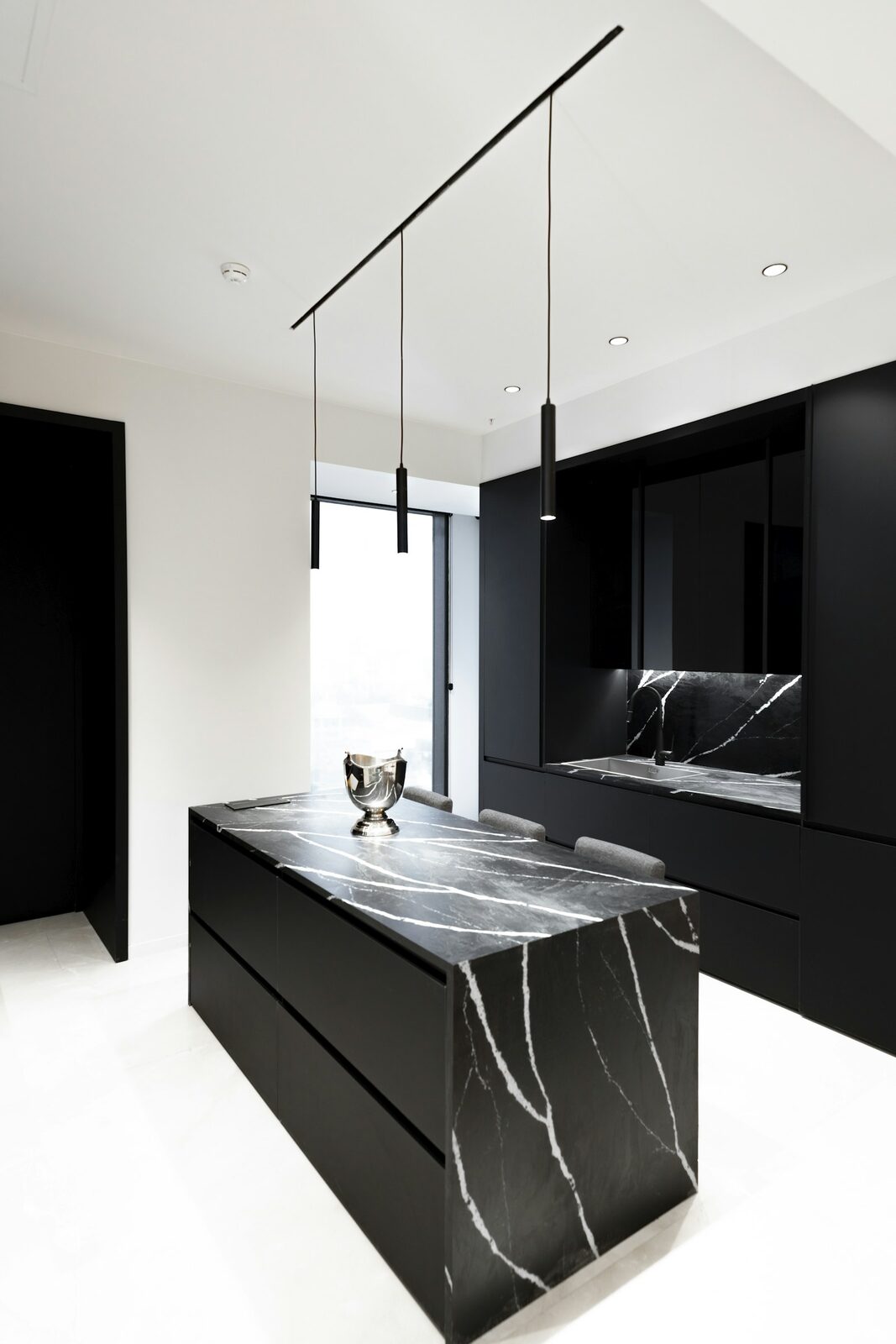
The wall behind the worktop finishes the room. We cut upstands and full-height splashbacks from the same slab as your worktop, so the stone flows from surface to wall without a tile in sight.
Upstands and splashbacks are the finishing move of a stone kitchen. A 100mm matching upstand closes the junction between worktop and wall neatly; a full-height splashback behind the hob turns the wall itself into a sheet of continuous stone — no grout lines to scrub, no tiles to date the kitchen, just the same veining rising from the surface you cook on.
Because we cut worktops in-house, splashbacks and upstands come from the same slab wherever possible, so colour and pattern match exactly — something no tile or off-the-shelf panel can promise. Guide pricing is simple: upstands around £28 per linear metre, full splashbacks around £140 per m², cut, polished and fitted.
This page covers the choice between upstands and full-height panels, heat behind hobs, fixing methods, and how to add stone to a kitchen you already have.
Should I choose upstands or a full splashback?
Upstands suit most kitchens: a 100mm strip of matching stone along every run that covers the wall junction, protects the paint from splashes and wipe-downs, and costs modestly — around £28 per linear metre as a guide. A full splashback earns its place behind the hob and sink, where the wall genuinely gets hit with fat, steam and water daily, and anywhere you want the visual drama of stone rising up the wall.
The most popular combination across Surrey kitchens is exactly that: upstands everywhere, one full-height panel behind the hob. It balances cost and impact, and it concentrates the showpiece where eyes and splatter both land. The instant calculator prices both so you can compare in seconds.
How much do stone splashbacks and upstands cost?
As a guide: upstands cost about £28 per linear metre and full splashbacks about £140 per m², supplied, cut, polished and fitted — on top of your worktop package. A typical hob splashback of 900mm x 750mm comes to roughly £95–£140; running upstands around a 6-metre kitchen adds around £170. Both are line items in the online estimate.
Material affects the number: a splashback in luxury marble costs more than essential quartz because the slab does. If the splashback can be nested into the offcut area of your worktop slabs, it often costs less than the per-m² guide — a genuine advantage of in-house fabrication, and one we always look for when programming the CNC cutting layout.
Can a stone splashback go directly behind a gas or induction hob?
Yes — quartz, granite, marble and porcelain all perform well behind hobs, with porcelain and granite the most heat-relaxed. Behind gas hobs, manufacturers specify minimum clearances from burner to combustible or heat-sensitive surfaces; stone comfortably exceeds the requirements that rule out paint and some glass panels, but we still respect each hob's stated clearance when we cut.
Quartz deserves one honest caveat: prolonged direct heat can mark the resin component, which matters for worktops under pans but very little for a vertical splashback 100mm behind the burners. In fifteen years we have not seen a properly-installed stone splashback fail from hob heat. If you cook hard on big gas burners daily, porcelain is the belt-and-braces answer — see porcelain & Dekton.
How are splashbacks fixed, and are there visible joints?
Splashback panels are bonded to a sound, flat wall with flexible adhesive, with any fixings hidden and the bottom edge sealed to the worktop with colour-matched silicone — a hairline shadow gap rather than a bead of mastic. Upstands are bonded the same way and sealed top and bottom. Nothing is screwed through the face; nothing visible holds the stone up.
Joints only appear when a wall exceeds slab size, which is rare behind a hob; where unavoidable we place them symmetrically and bond with colour-matched resin exactly as in worktop fabrication. Socket and switch cut-outs are machined on the CNC beforehand, to your electrician's positions, with crisp polished reveals.
Should the splashback match the worktop or contrast with it?
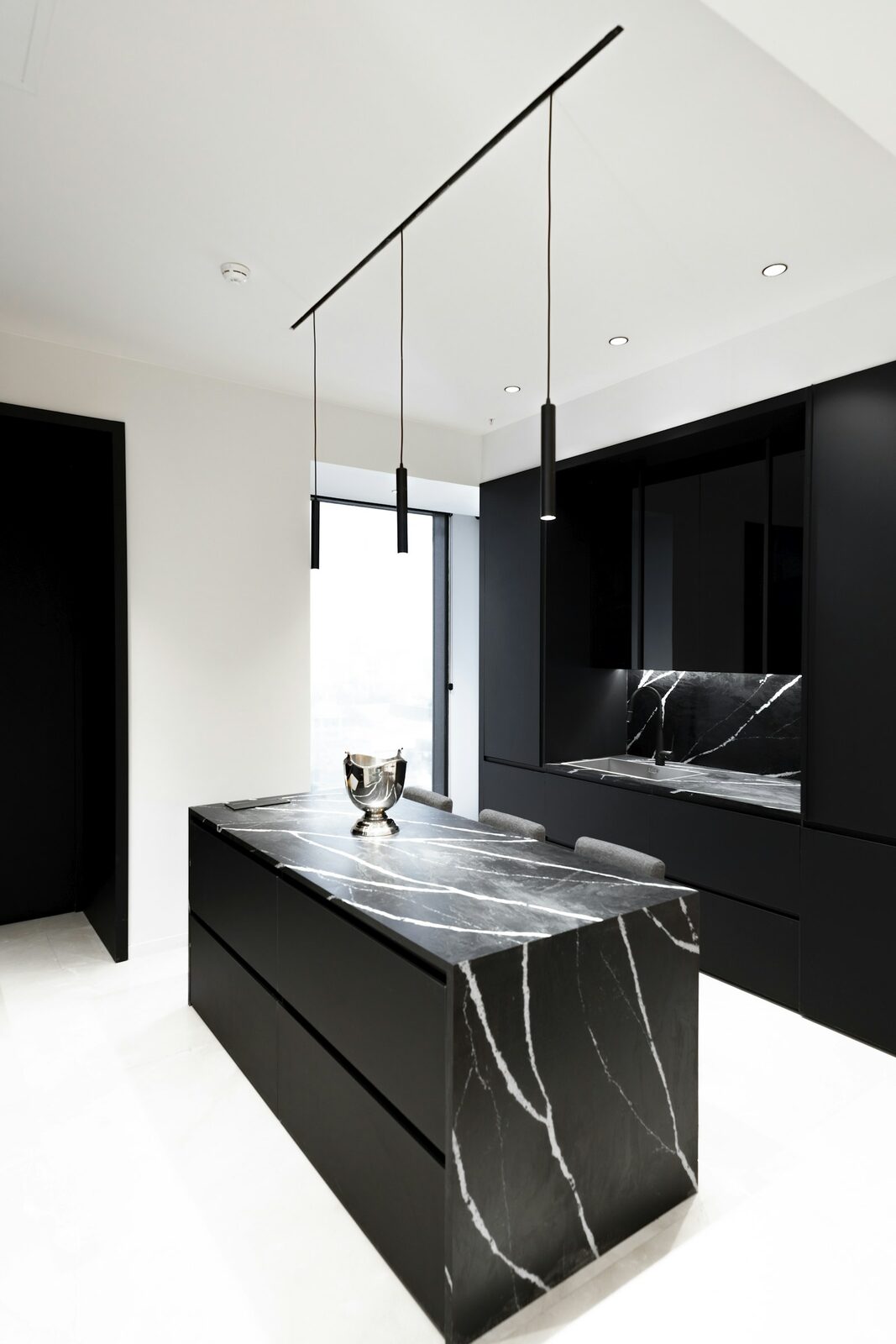
Matching — same slab, same finish — is the safest and most luxurious look, and it is what in-house fabrication does best: the vein that crosses your worktop carries on up the wall. Contrast works when it is deliberate: a plain porcelain worktop with one dramatic book-matched marble panel behind the hob, or a dark stone splashback grounding a pale kitchen.
Our honest advice: if your worktop is patterned, match; if it is plain, you have a free hand. Bring the question to slab viewing — holding the actual materials together in daylight settles in two minutes what mood boards argue about for weeks. Free samples help here too.
Can I add stone upstands or a splashback to my existing worktops?
Yes. Retrofitting upstands or a hob panel to a kitchen you already love is a tidy half-day job and a popular use of our remnant stock — small areas often come straight out of a stocked offcut at a friendly price. We colour-match to your existing surface as closely as the material allows, or pick a deliberate contrast where an exact match no longer exists.
Tiled walls can usually be over-boarded or stripped first; painted walls just need to be sound and flat. Send a photo and rough sizes via the contact page and we will quote it the same working day — or call 0208 123 3004.
How high should a full splashback go?
Behind a hob, run it to the underside of the extractor or cabinet above — typically 750mm — so the whole splash zone is one cleanable sheet. On open walls without cabinets, full-height to the ceiling is the dramatic option and increasingly the designer default; window walls usually stop at the sill, with the sill itself cut from matching stone to carry the line through.
There is no regulation height, only the practical rule that the stone should cover wherever water and fat actually land, plus the visual rule that edges should align with something — a cabinet line, a sill, a shelf. The laser template captures all of it exactly.
Can you do window reveals and sink windows in stone?
Yes — the sink-under-window kitchen is a British classic, and lining the window reveal in the worktop stone is its best finishing detail. We cut reveal linings, sill pieces and upstand returns so the stone wraps from worktop into the window opening without a painted junction that would peel above a wet sink zone.
Reveals are templated with the rest of the kitchen and cut from the same slabs. The effect is quietly expensive-looking and costs modestly because the pieces are small — frequent remnant-nesting territory. If your sink sits under a window, mention it at quote stage and we will include the reveal option as a separate line so you can decide on numbers.
How do I clean and care for a stone splashback?
Vertical stone is the easiest surface in the kitchen: nothing stands on it, nothing soaks into it, and gravity is on your side. Warm water with a drop of washing-up liquid handles daily fat film; a pH-neutral stone spray handles the weekly proper clean. Quartz and porcelain tolerate ordinary kitchen degreasers; natural marble and granite prefer you did not, because aggressive cleaners shorten the sealer's life.
The one habit worth forming is wiping behind the hob after serious frying sessions rather than monthly — polymerised fat is the only thing that ever takes effort to remove from stone, and it takes none when fresh. Full product do's and don'ts are in removing stains from stone.
Damage is rare on vertical surfaces, but edges can chip if struck with a pan handle; chips fill and polish out as described in chip & crack repair, usually invisibly.
Do splashbacks work in utility rooms and boot rooms?
Beautifully — and often from remnants, which suits the budget of rooms guests rarely see. A quartz upstand run above a utility worktop stops detergent splash staining the paint; a porcelain panel behind a dog-wash or boot-room sink takes hose-downs that would destroy any painted finish; and a stone shelf above the machines ties the room to the kitchen next door.
Utility spaces are also where leftover stone from your kitchen project naturally lands: when we plan the slab layout we flag usable offcuts, and many customers get a utility upstand set for little more than the fabrication time. Mention the utility room when you price the kitchen on the calculator or by phone, and we will quote it as an add-on line while the slabs are already on the saw.
Guide prices
Guide only — your exact fixed price is confirmed after the free laser template, and we beat any written like-for-like quote.
Matching upstands (100mm)
£28/lm
Cut from the worktop slab where possible.
Full splashback
£140/m²
Supplied, polished and fitted — guide only.
Hob panel (900 × 750mm)
£95–£140
The most popular single panel.
Socket / switch cut-outs
£25 each
CNC-machined with polished reveals.
FAQ
Your questions, answered.
Are stone splashbacks better than glass or tiles?+
How thick is a stone splashback?+
Can you cut around sockets and switches?+
Do upstands come in different heights?+
Will the splashback match my worktop exactly?+
Related reading
 Kitchen worktopsThe flagship guide — materials, pricing, process.Read
 QuartzThe most popular splashback-and-worktop pairing.Read
 Porcelain & DektonThe heat-proof choice behind serious hobs.Read
 Offcuts & remnantsSmall panels from stocked offcuts.Read
 Instant estimateAdd upstands and splashbacks to your online quote.Read
Ready to price your worktops?
Get an instant guide estimate online, or talk it through with the workshop.