Care & repair guide
Worktop Edge Profiles Explained
The edge is the detail you touch fifty times a day. Most profiles cost little or nothing extra — choosing well is about style, practicality and the stone itself.
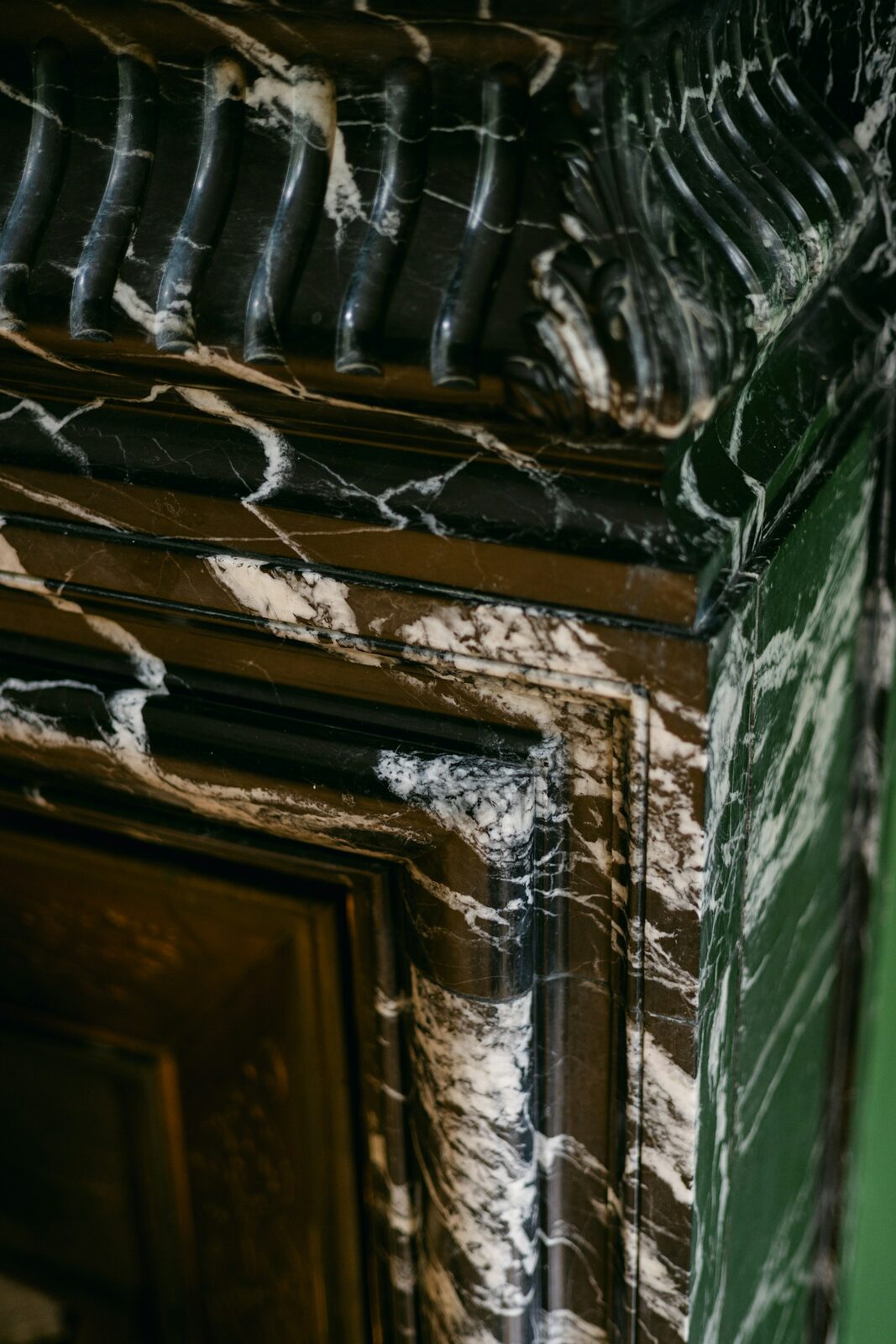
Every worktop needs its sawn edges machined and polished, so an edge profile is not an optional extra — it is a choice you make anyway, and most of the everyday options cost the same. The profile affects how the worktop looks (crisp and contemporary versus soft and traditional), how it lives (sharp arrises chip more easily than eased ones; some profiles shed crumbs and drips better), and how thick the stone appears.
At our West Molesey workshop the edges are cut and polished on CNC machinery, which is why complex profiles hold a perfectly consistent line along a three-metre run. This guide walks through the profiles we shape most across quartz, granite, marble and porcelain, what each suits, and where the cost implications genuinely lie — including the mitred edges behind waterfall islands.
Which edge profiles are standard — and free?
The everyday profiles — pencil round, eased/arris, small bevel (chamfer) and half bullnose — are included in our fitted prices across all materials. They differ in character, not cost, so choose on looks and feel rather than budget.
The pencil round is the modern default: the top and bottom corners softened to a tight radius, keeping the worktop looking crisp and square while removing the fragile sharp edge. The eased edge is squarer still, with just the arris broken. A small bevel replaces the curve with a tidy 45° facet that catches light as a bright line — subtly more architectural. Nine out of ten kitchens we fit take one of these three, and they suit every material and every style from shaker to handleless.
What is a bullnose edge — full and half?
A half bullnose rounds the top corner into a generous curve and leaves the underside square; a full bullnose rounds the entire edge into a half-circle, like the edge of a pebble. Both are softer, more traditional looks that pair naturally with shaker and country kitchens.
Practical characteristics: rounded profiles are the most forgiving of knocks — no arris to chip — and kindest in households with small children. The full bullnose has one quirk: drips travel around the curve and under the worktop rather than falling from a defined edge, so it is less ideal immediately around sinks. A half bullnose keeps the soft look while the square underside acts as a drip line. Both profiles are standard on 20mm and 30mm stone.
What is an ogee edge — and when does it work?
The ogee is the classical S-curve — a concave sweep flowing into a convex one — borrowed from period mouldings and the most decorative profile in regular use. It suits traditional kitchens, fireplace surrounds and furniture pieces, and it rewards thicker stone: on 30mm the curve has room to read properly.
Ogees carry a modest fabrication charge because they remove more material and demand more polishing passes, typically priced per linear metre on the quote. Material choice matters too: an ogee in strongly veined marble or granite shows the stone's pattern wrapping through the curve — genuinely beautiful — whereas on plain engineered quartz the profile does most of the talking. In a sleek contemporary kitchen an ogee usually fights the architecture; keep it for rooms with mouldings and detail to echo.
What are mitred edges and shark nose profiles?
A mitred edge bonds two pieces at 45° so the worktop appears to be one massive block — it is how a 20mm slab presents as a 60, 80 or 100mm statement edge, and how waterfall ends turn the corner to the floor with the pattern flowing continuously. The shark nose is the opposite trick: a rising undercut bevel that makes the stone look knife-thin and the worktop appear to float.
These are the two profiles driving contemporary high-end kitchens, and both are fabrication-intensive — precise 45° cutting, bonding and finishing — so they are priced per detail (our waterfall ends, for example, are £340 each as a 2026 guide). Mitres are also the standard solution for porcelain, whose thin slabs and surface-printed patterns are shown to best advantage with a mitred apron rather than an exposed core edge.
Which edge suits which material?
Quartz takes every profile cleanly and consistently — its uniformity makes it the most forgiving canvas. Granite and marble handle all profiles too, with curves (bullnose, ogee) showcasing natural veining especially well. Porcelain is the exception: its thinness and hardness favour straight profiles — eased, small bevel and mitred builds — over deep curves.
Thickness interacts with the choice: 20mm stone suits tight pencil, bevel and mitred-thick looks; 30mm gives ogees and full bullnoses the depth they need. There is also a repair consideration — sharp square arrises are the most chip-prone detail on any worktop, and softened profiles measurably reduce the edge chips we are called to repair. If your kitchen is a busy one, a pencil round or bullnose is self-insurance.
Do edge profiles change the price much?
Mostly, no. Pencil, eased, bevel and half bullnose are included in our fitted rates. Full bullnose and ogee add a modest per-metre machining charge. The genuine cost lines are the constructed details — mitred thick edges, waterfall ends and shark nose aprons — which are quoted per piece because they are built, not just profiled.
A sensible budgeting approach: pick the worktop material and band first, keep standard profiles on the working runs, and spend the edge budget where it is seen — a mitred waterfall on the island delivers more impact per pound than an ogee along every wall. The instant estimator includes waterfall ends so you can price that trade-off directly, and samples of each profile are on display when you visit the workshop — or ask for profile photos alongside your free material samples.
FAQ
Your questions, answered.
What is the most popular edge profile?+
Can I see edge profiles before deciding?+
Can different edges be used in one kitchen?+
Which edge is safest with young children?+
Do upstands and splashbacks get edge profiles too?+
Can the edge profile be changed after fitting?+
Related reading
Worktop Costs Guide 2026
Where edges sit in the overall price.
ReadHow to Measure Your Kitchen
Edge decisions are confirmed at template stage.
ReadIslands & Breakfast Bars
Waterfall ends and mitred statement edges.
ReadKitchen Worktops
The complete supply-and-fit service.
ReadChip & Crack Repair
Why softened edges chip less — and fixes when they do.
ReadInstant Estimate
Price waterfall ends and extras in your layout.
Read
Ready to price your worktops?
Get an instant guide estimate online, or talk it through with the workshop.