Care & repair guide
Re-Polishing Stone Worktops
Lost gloss, etch rings and fine scratches are all the same problem at different depths — and all of them can be polished back out of natural stone.
The polish on a stone worktop is not a coating — it is the stone itself, ground and buffed through successively finer abrasives until the surface reflects light like glass. That is worth understanding, because it means a dull or damaged polish can always be re-created: re-polishing simply repeats the last steps of the factory process in your kitchen, removing a microscopic layer and refining what is underneath.
It also explains what has happened when a worktop goes dull. Acid etching dissolves the refined surface of marble and limestone; abrasive cleaners and years of wiping put micro-scratches into any stone; wear concentrates where the work happens. From our West Molesey workshop we restore worktops across Surrey and SW London — this guide explains what is DIY-able, what needs machinery, and what to expect from each.
Why has my stone worktop gone dull?
A worktop dulls for one of three reasons: chemical attack (acidic foods and cleaners etching marble and limestone), mechanical wear (micro-scratches from abrasive pads, crockery and grit scattering the light), or residue build-up (soap film, polish products and hard-water minerals hazing the surface). Each has a different remedy.
Start with the easiest diagnosis: clean a test patch thoroughly with a pH-neutral stone cleaner and dry it. If the shine returns, your problem was residue — change the cleaning routine and you are done. If the patch stays dull, you are looking at etching or wear, which need abrasive correction: polishing compound for light damage, machine re-polishing for widespread loss.
Can I remove light etch marks from marble myself?
Yes — light, shallow etch marks on polished marble respond to a marble polishing powder (usually tin or cerium oxide based): dampen the mark, work the powder with a felt pad in small circles for a few minutes, rinse and buff dry. Repeat once or twice until the gloss matches.
This works because the powder is a very fine abrasive doing exactly what the factory line did. It is only suitable for genuine light etching — a water ring, a lemon splash wiped quickly. If you can feel the mark with a fingernail, or it covers more than a saucer-sized area, powder will leave an uneven "orange peel" sheen, and the honest route is professional refinishing. And remember sealing will not prevent the next etch — only habits do.
What does professional machine re-polishing involve?
Professional re-polishing works through a sequence of diamond abrasive pads — coarse to fine — on a variable-speed machine, wet, removing a fraction of a millimetre of stone and rebuilding the finish stage by stage to a uniform gloss. A typical kitchen takes half a day to a day, done in situ.
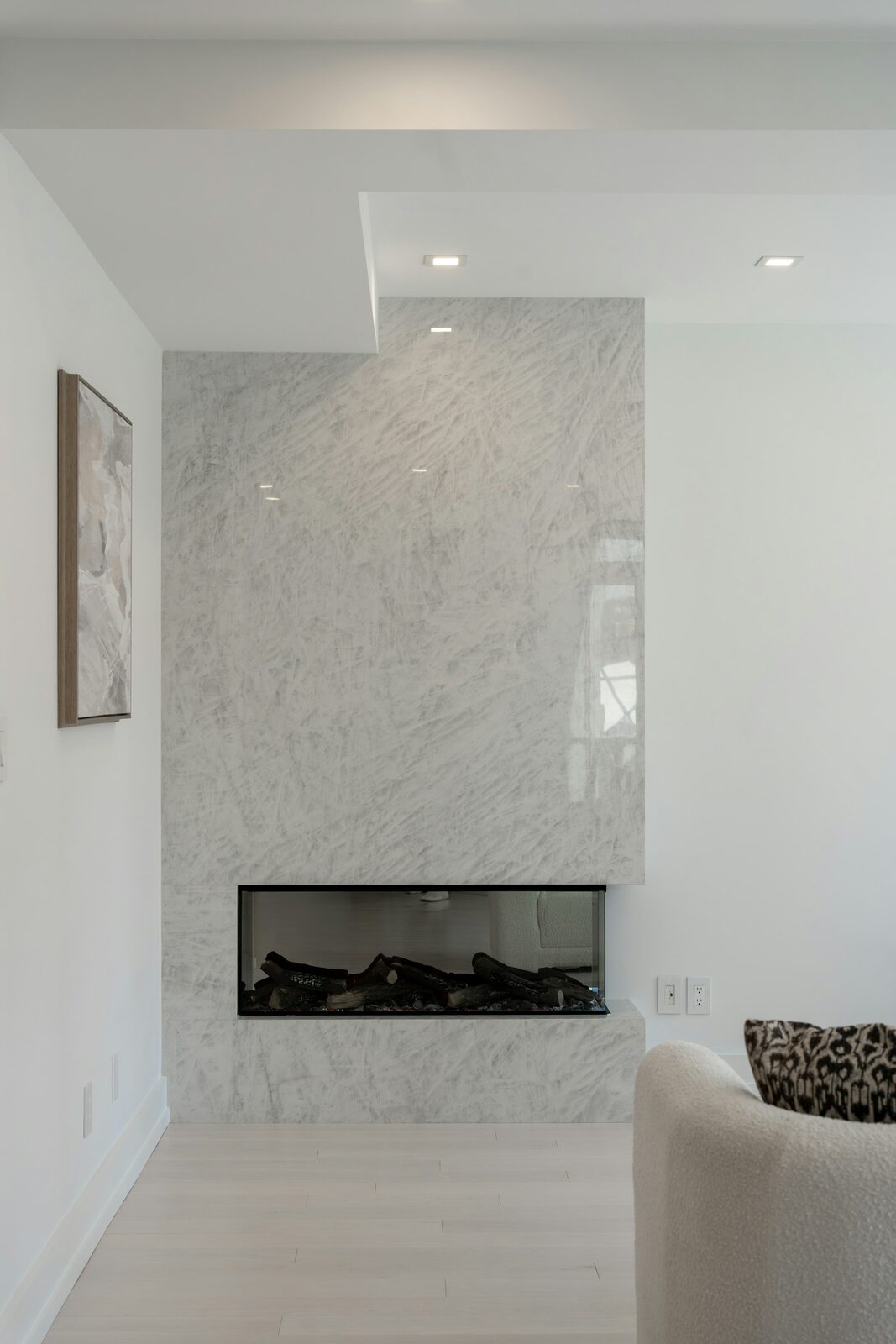
The skill is in evenness: feathering the restored area into the rest of the worktop so there is no visible boundary, keeping edges and profiles crisp, and knowing when to stop on each grit. We finish with a thorough clean and a fresh coat of impregnating sealer, since re-polishing opens the pores. The result on marble and granite is genuinely a factory-fresh surface — this is the same process used on fireplace surrounds and staircases, not a wax shine.
Polished vs honed — should I restore the gloss or go matte?
Re-polishing is also the moment you can change the finish. A honed (matte) surface is produced by stopping the abrasive sequence earlier — so a tired polished marble worktop can be converted to honed in the same visit, and honed hides future etching and fine scratches far better than gloss does.
Many Surrey marble owners make exactly this switch after a few years of chasing etch marks on a polished top: honed Carrara wears into a soft, even patina instead of a patchwork. The trade-offs: honed stone is slightly more absorbent (seal it a touch more often) and colours read a little lighter and softer. Order a honed and a polished sample of your stone before deciding — the difference in character is bigger than photographs suggest.
Can quartz and porcelain worktops be re-polished?
Only partially, and it is specialist work. Engineered quartz is stone bound in resin, and aggressive abrasion generates heat that can burn or discolour the resin — light scratch correction is possible, but full refinishing is risky and brand warranties often exclude it. Porcelain and Dekton surfaces are fired with their finish and cannot be re-polished conventionally.
The practical consequences: treat scratch-prevention seriously on quartz (boards, no sliding ceramics), and on porcelain rely on its exceptional hardness — surface damage is rare, but what does occur is usually managed with colour-matched repair fills rather than refinishing. If a quartz top is badly scratched across a large area, replacement is often more economical than restoration; the cost guide and estimator will give you the numbers.
How do I keep the polish once it is restored?
Three habits keep a restored finish: clean only with pH-neutral stone cleaner and microfibre (no vinegar, no cream abrasives), keep acids off calcium stones with boards and coasters, and stop grit scratches by lifting rather than sliding chopping boards, appliances and crockery.
Add two maintenance rhythms: re-seal when the water-drop test says so, and deal with stains and etch spots as they occur rather than letting them accumulate into a general dullness. A worktop maintained this way needs professional attention rarely — many of our restoration clients book a refresh visit every three to five years, which is cheaper than letting the surface decline for a decade and starting again.
What does re-polishing cost — and when is replacement smarter?
As a 2026 guide, in-situ restoration across Surrey and SW London runs from around £200–£300 for a single problem area (an etched patch, a scratched zone) to £450–£900 for full re-polishing of a typical kitchen's worktops, depending on stone, finish and condition. Every job is priced from photos first.
Replacement becomes the smarter spend when the stone is thin, extensively cracked, badly stained through its depth, or simply a colour you have gone off — restoration polishes the surface, not your feelings about beige granite. With fitted kitchens from £1,150 and a 60-second estimator, it costs nothing to compare both numbers before deciding. We give an honest recommendation either way — restoration is our trade too, so we have no bias toward selling you new stone. Call 0208 123 3004.
FAQ
Your questions, answered.
Can every scratch be polished out?+
Is re-polishing messy? Will my kitchen be out of action?+
Will re-polishing remove stains too?+
How long does the restored polish last?+
Can you polish the worktop to a higher gloss than it originally had?+
Do you re-polish floors, stairs and fireplaces as well as worktops?+
Related reading
 Sealing Marble WorktopsEssential aftercare once the finish is restored.Read
- Chip & Crack RepairFills and bonds, finished by polishing.Read
- Removing Stains from StoneDeep stains need extraction before polishing.Read
- Marble WorktopsThe stone that benefits most from expert refinishing.Read
 Fireplaces & HearthsWe restore and fabricate stone fire surrounds.Read
 Staircases & FlooringStone floors and treads, restored or supplied new.Read
Ready to price your worktops?
Get an instant guide estimate online, or talk it through with the workshop.