Throughout the home
Staircases, Halls & Flooring
Nothing announces a house like a stone hall. We cut treads, risers, landings and flooring in marble, granite, limestone-look porcelain and more — to drawing, to template, to the millimetre.
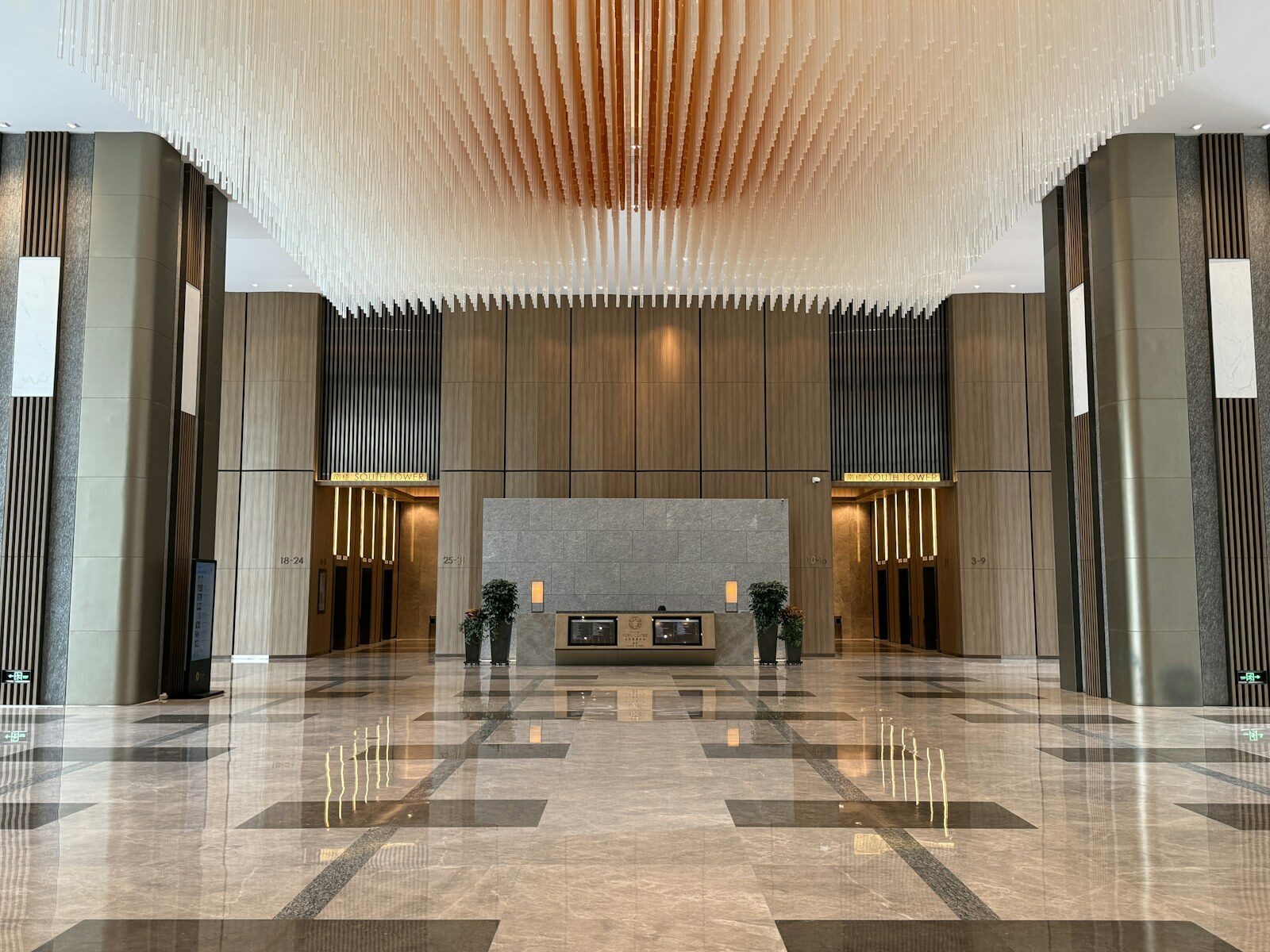
Stone floors and staircases are the pieces of fabrication closest to architecture: treads and risers cut to a stair-maker's drawing, hall floors laid out around original features, landings and thresholds that take a century of footfall and look better for it. Surrey's period homes — and its boldest new builds — keep us busy with both.
We fabricate treads, risers, stringers-cladding, landings, floor tiles in bespoke sizes, thresholds and skirtings in granite, marble and large-format porcelain, all cut on our own CNC machinery in West Molesey. Supply-only to your stone drawings, or templated and fitted by our team across Surrey and South West London. For garden steps and external paving, see landscaping stone.
Which stone works best for stairs and hallways?
High-traffic floors want hard, dense material: granite and porcelain top the list for pure durability, with honed finishes preferred underfoot for grip and for hiding wear. Marble halls are the classic statement — genuinely viable, as a thousand Georgian townhouses attest, provided you accept a patina developing over decades and keep grit swept.
Slip resistance drives finish choice more than material: honed, flamed or textured surfaces for treads and wet-risk halls; polish reserved for low-risk display areas. For families and dogs, our honest default is honed porcelain or granite — the look survives the life. Compare materials properly at the materials hub.
Can you clad an existing staircase in stone?
Yes — cladding a sound concrete or masonry staircase with 20mm or 30mm stone treads and 20mm risers is the standard method, and far more economical than solid stone steps. Each tread is templated or cut to drawing with a polished nosing (square, pencil-round or with an anti-slip groove), bedded and bonded in sequence from the bottom up.
Timber staircases can sometimes take thin porcelain cladding if the structure is stiff enough — we assess honestly, because a bouncy stair will crack any stone laid on it. Curved and cantilevered work is quoted case-by-case from the architect's or stair-maker's drawings.
Do you cut floor tiles to bespoke sizes and patterns?
We do — large-format flags, chequerboard schemes (the black-and-white marble hall is eternal), borders, and tiles sized to a room's geometry so cuts land symmetrically at the walls. Bespoke cutting is what separates a designed stone floor from a warehouse tile job: the pattern is planned on drawing first, and every piece arrives numbered.
We supply floors for your tiler, or fit complete schemes ourselves depending on scale. Underfloor heating is fully compatible with stone and porcelain — stone is in fact the best-conducting floor finish there is — subject to the usual commissioning rules about ramping temperatures gently.
What about landings, skirtings and matching details?
A stone staircase reads finished when the details match: landings cut from the same material as the treads, stone skirtings in place of painted timber, thresholds between floor finishes, and flush trims at doorways. We fabricate all of them from the same slabs so tone and veining stay consistent through the scheme — the same whole-scheme slab planning we use on bathrooms.
For period halls we also cut repair pieces: single replacement flags, matching treads for a worn Victorian stair, or infills where a wall has moved. Matching century-old stone exactly is rarely possible; matching it convincingly usually is, and we will show you the candidate stone first.
What do stone stairs and floors cost?
Guide prices: stone or porcelain flooring from £140–£320 per m² supplied and fitted depending on material and format; stair cladding from around £180–£260 per step (tread and riser, fitted) in granite or porcelain, more in premium marble; landings and skirtings priced by area and linear metre respectively. Supply-only cutting to drawings is priced per piece on the cutting list.
Floors and stairs vary more than kitchens, so every scheme is quoted from drawings or a site visit — fixed in writing before fabrication, with the usual promise attached: we beat any written like-for-like quote.
How do I keep a stone floor looking its best?
Grit is the enemy, not feet: a doormat at the entrance and regular sweeping or vacuuming removes the abrasive that dulls finishes over years. Wash with pH-neutral stone soap — never vinegar or supermarket floor cleaners on marble and limestone-family materials — and re-seal natural stone every one to two years in traffic areas.
Worn or dulled stone floors can be professionally re-honed and re-polished in place, often looking better than the day they were laid; see re-polishing stone. Porcelain asks for none of this — sweep, mop, done — which is exactly why it has conquered the hallway market.
Guide prices
Guide only — your exact fixed price is confirmed after the free laser template, and we beat any written like-for-like quote.
Stone / porcelain flooring
£140/m²
Supplied & fitted — material dependent.
Stair cladding, per step
£180
Tread + riser, granite or porcelain, fitted.
Marble chequerboard schemes
£220/m²
Cut to the room's geometry.
Supply-only cutting to drawings
POA
Per-piece pricing on the cutting list.
FAQ
Your questions, answered.
Is a marble floor practical with children and dogs?+
Can stone go over underfloor heating?+
Do you make anti-slip stair nosings?+
Can you replace a single damaged flag or tread?+
Do you fit the floors yourselves?+
Ready to price your worktops?
Get an instant guide estimate online, or talk it through with the workshop.