Brand
Silestone worktops.
The best-known name in quartz — a huge colour library backed by Spanish manufacturer Cosentino.
Silestone is probably the first name most people hear when they start looking at quartz worktops. It is made by Cosentino, a Spanish family firm that grew from a small Andalusian stoneworks into one of the largest surface manufacturers in the world, and Silestone has been its flagship quartz line for decades. That scale matters in practice: the colour library is enormous, supply into the UK is dependable, and almost every kitchen showroom in Surrey has a Silestone sample board somewhere on the wall — so it is easy to compare what we quote against what you have already seen.
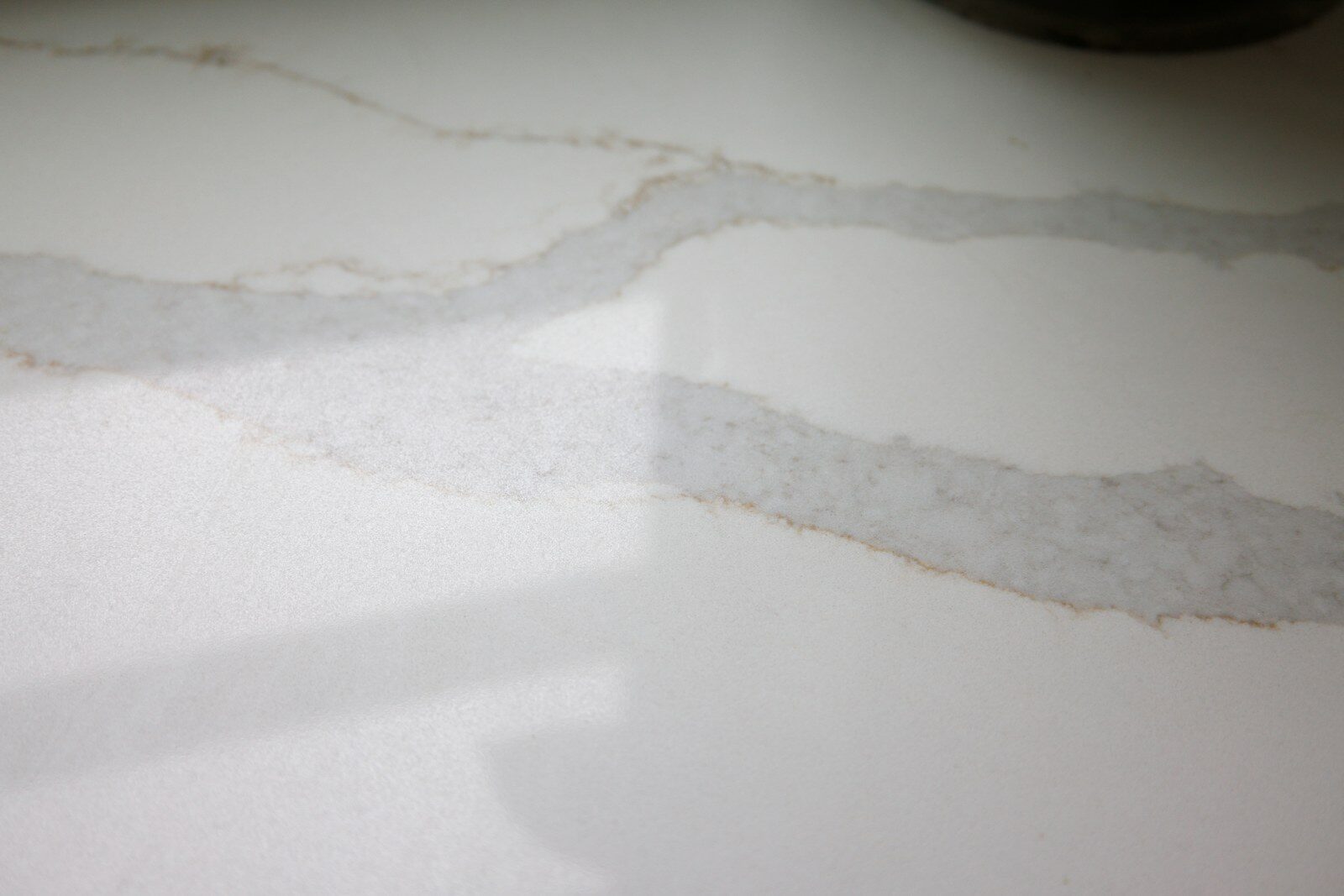
The range covers every look a kitchen designer is likely to ask for. There are quiet, uniform whites, creams and greys that suit handleless modern kitchens; soft marble-look designs with delicate grey veining for people who love the look of Calacatta or Carrara without the upkeep of real marble; warm concrete and stone effects; and deep charcoals and blacks that work beautifully against brass taps and dark cabinetry. Finishes run from high polish to soft matt textures, and in recent years the brand has moved its production towards blends that incorporate recycled mineral and glass content — a selling point if sustainability is on your list.
Why do so many of our Surrey and South West London customers end up choosing it? Mostly confidence. Silestone is a known quantity: the colour you approve from the sample is the colour that arrives on the slab, batch after batch, which is exactly what you want when a kitchen company, a builder and a stone fabricator all have to coordinate around one island delivery date. It sits in the middle-to-upper band of quartz pricing — our worktop cost guide explains where it lands against other brands — and the marble-look designs in particular hold their own in kitchens costing three times as much.
Care is quartz care, which is to say barely any. Warm soapy water and a cloth handle day-to-day cleaning; there is no sealing, ever. The two habits worth keeping are using a trivet under pans straight off the hob — the resin content in any quartz dislikes direct scorching heat — and avoiding aggressive solvents or oven cleaner on the surface. Our guide to removing stains from stone covers the rare mishaps.
We hold Silestone sample material at our West Molesey workshop and fabricate every job ourselves on CNC machinery — we have been cutting stone here since 2011, and nothing is farmed out. You choose the colour, we laser-template your kitchen free of charge, cut and polish the slabs to half-millimetre tolerances, and fit within 7–10 days of template. Cut-outs, drainer grooves, upstands and mitred waterfall ends are all machined in-house.
On specification, Silestone gives you plenty of latitude. Slabs come in thicknesses to suit everything from slim contemporary profiles to substantial traditional tops, and because we machine the edges ourselves you can choose anything from a simple pencil-round to a full bullnose or a mitred built-up edge that makes a 20mm slab read as 60mm of solid stone. Jumbo-format slabs are available in many colours, which on a large island can mean no joins at all — worth asking about before a kitchen design is finalised, because island dimensions sometimes only need to shift by a few centimetres to come out of one piece. We advise on all of this at the template visit, with the slab sizes for your chosen colour in front of us.
The buying process is deliberately simple. Start with the colour families: if your scheme is pale and modern, shortlist two or three whites and judge their undertones against your cabinet doors — Silestone's whites range from cool blue-whites to warm alabasters, and the difference only shows next to the actual kitchen. If you are after the marble look, compare a quiet-veined design against a bold one at full-slab scale, not sample scale. Once the colour is settled we laser-template the kitchen with the old worktops still in place wherever possible, so you are never left without a working kitchen; removal of the old tops is handled on fitting day as part of the job. Between template and fitting the slabs are cut, edge-polished and dry-assembled at the workshop, and the installation itself is normally a single day: tops bedded and levelled, joints bonded and finished, sink and hob cut-outs ready for the plumber and electrician.
Silestone also plays well beyond the kitchen run. The same material family carries into full-height splashbacks behind the hob, window boards over the sink, and matching upstands that close the junction between worktop and wall — details that lift the whole installation for relatively little money, especially when cut from the offcuts of your own slabs. We flag what your slabs will yield at quote stage so none of that material goes to waste.
If you already have a Silestone quote from a kitchen showroom, send it over — we beat any written like-for-like quote. Price your layout in sixty seconds with the instant estimate calculator, or order free samples and see the colours in your own light before deciding.
Silestone — FAQs
How much do Silestone worktops cost fitted?+
Does Silestone need sealing?+
Can I see Silestone colours before ordering?+
Will you match a Silestone quote I already have?+
Related reading
Quartz worktops
The full quartz hub — colours, pricing, pros and cons.
ReadCaesarstone
The other household name in engineered quartz.
ReadDekton
Cosentino's ultracompact sister surface.
ReadInstant quote calculator
Price your worktops in 60 seconds.
ReadFree samples
Up to three colours delivered to your door.
Read
Price Silestone for your kitchen
Get an instant guide estimate online, or talk it through with the workshop.